10 Real Estate Accounting Tips Every Property Owner Should Know
- July 2, 2026
- Amit K. Vatsayan
Behind every profitable real estate portfolio is a highly disciplined financial system. It does not matter if you have only a few residential units or oversee commercial assets; real estate accounting directly impacts profitability, compliance, cash flow, and long-term decision-making.
Unlike standard bookkeeping, accounting for real estate includes different aspects like lease tracking, property-level reporting, depreciation schedules, CAM reconciliation, tenant accounting, tax planning, and asset performance analysis. In the absence of robust and structured financial management, even high-performing properties can develop cash leaks and reporting inefficiencies.
Considering that the real estate market is set to reach USD 7,351.30 billion by 2033, it reflects the need for structured financial management, especially in terms of real estate accounting.
In this guide, we will list practical and actionable real estate accounting tips every property owner should implement to strengthen financial control and improve portfolio performance.
Real estate businesses operate differently from traditional businesses. Here is what happens:
Effective real estate accounting helps property owners to track true property profitability, improve cash flow, help prepare accurate financial statements, manage lease obligations, stay compliant with tax regulations, make faster investment decisions, and reduce month-end reporting bottlenecks.
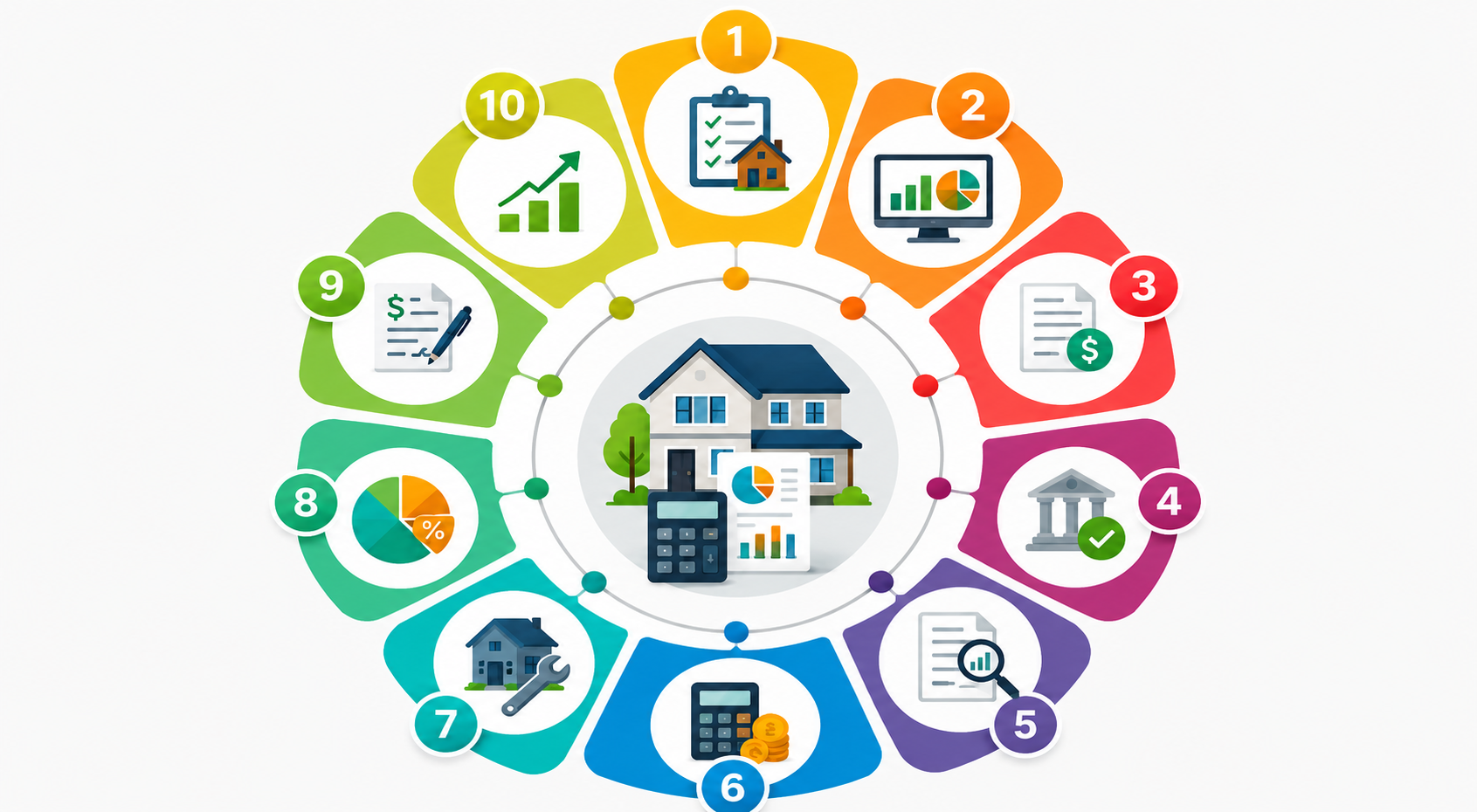
Effective real estate accounting is more than just balancing books. So, here are the ten practical tips that can help property owners improve cash flow, strengthen financial control, and make smarter investment decisions.
One important real estate accounting principle includes aptly separating business and personal assets. Mixing personal capital with rental revenue will automatically complicate the bookkeeping, disturb profitability metrics, and also lead to legal risks.
Every property or entity needs to have a dedicated:
This separation helps to make the business audit-ready and makes tax preparation significantly easier. This practice supports stronger real estate accounting principles and simplifies monthly reporting.
A Chart of Accounts (COA) is the index of every financial account categorised into your business ledger. Without a structured COA tailored specifically for the property industry, real estate accounting can end up being highly disorganised.
Your COA needs to include important property-specific categories such as:
Property-level accounting creates cleaner performance analysis as well as more reliable forecasting.
Many property owners tend to delay reconciliations and reporting until year-end. This paves the way for errors. Instead, it is best to establish a structured month-end close process that includes:
It is important to know that profitability will not always imply a healthy cash flow system. Property owners overlook timing differences between rent collection, loan payments, maintenance expenses, and vendor obligations.
Hence, it is important to track :
Cash forecasting helps avoid liquidity gaps and supports expansion decisions. Strong accounting for real estate focuses equally on profitability and available cash.
Rental income seems easy and simple, but revenue recognition is quite complex. Questions property owners should answer:
Standardised lease accounting helps to create cleaner financial statements and also helps in reducing reporting inconsistencies. Lease administration should become part of your recurring accounting workflow.
It is not important to include every property cost in the income statement immediately. A useful distinction:
| Operating Expense | Capital Expense |
| Repairs | Renovations |
| Cleaning | Structural upgrades |
| Utilities | Building improvements |
| Routine maintenance | Long-term asset enhancements |
Proper classification will help to improve tax planning, asset valuation, and financial reporting accuracy. This is one of the most important real estate accounting principles that directly affects profitability calculations.
Manual accounting often proves to be unsustainable as portfolios grow. Modern property accounting teams are now relying on software platforms that can help to centralise general ledger, AP/AR, tenant accounting and financial reporting. and variance analysis.
Property owners using integrated accounting systems reduce reconciliation delays and gain better reporting visibility. Moreover, automation can reduce time on accounting but also improve the accuracy.
In fact, as per research, the property management software market will reach USD 5.89 billion by 2033, so more and more real estate businesses are adopting automation software.
Late collections often lead to reduced returns. Hence, it is important to create a structured receivables process:
Small collection delays will eventually compound into large working capital gaps over time. A proper receivables function strengthens the overall real estate accounting performance in the long run.
Financial statements alone are not enough. It is hence important to track metrics such as Net Operating Income (NOI), occupancy rate, expense ratio, cash-on-cash return, debt coverage ratio, and revenue per occupied unit.
Financial analysis needs to be more than historical reporting and support operational decisions. This is where accounting becomes a growth function instead of a compliance activity.
As portfolios grow over time, accounting complexity also increases at a rapid rate. Property owners often encounter challenges such as:
Specialised accounting support can assist in maintaining reporting quality while helping the internal teams to remain focused on portfolio growth. Industry outsourcing models have increasingly evolved toward specialised finance support rather than generic bookkeeping because sector expertise produces stronger outcomes.

Property accounting becomes demanding as the operations scale across multiple units, locations and entities. Outsourcing Hub India specialises in real estate and property accounting support for commercial and residential portfolios.
With more than 20 years of industry experience, OHI supports developers, REITs, funds, and property management firms across the U.S. through services including lease administration, AP/AR management, financial analysis, reporting, tenant accounting, and month-end accounting support.
OHI reports supporting portfolios spanning hundreds of thousands of units. It aims to help clients to streamline processes as well as improve operational efficiency.
Strong real estate accounting is not simply about recording transactions. It is about creating financial clarity that supports better property decisions.
When property owners have disciplined accounting processes, separate reporting structures, monitor cash flow, and adopt property-specific controls, compliance becomes extremely simple and easy. Hence, businesses can get proper visibility, predictability, and stronger returns.
Whether you manage two to three properties or have a successfully growing real estate portfolio, adopting these practices can help create a better financial foundation for long-term success.

Real estate accounting is the process of recording, tracking, analysing, and reporting financial transactions related to property ownership, management, leasing, and investment activities.
Some important real estate accounting principles include revenue recognition, expense matching, asset capitalisation, depreciation, accurate financial reporting, and maintaining separate accounts for each property.
A chart of accounts (COA) is an organised list of income, expense, asset, liability, and equity categories, customised for property accounting and financial tracking.
Robust cash flow management helps the property owners to meet expenses and avoid liquidity issues. It also supports future investment opportunities.
Many property owners now use accounting and property management software, which helps integrate different aspects of the business, such as bookkeeping, reporting, lease administration, and accounts payable/receivable functions.