How Real Estate Accountants Help Your Business Grow and Stay Profitable
- July 6, 2026
- OHI
The real estate industry is built on high-value assets, recurring income streams, and complex financial transactions. As property portfolios grow, the challenges of managing rental income, expenses, taxes, compliance, and investment performance also increase.
In fact, the U.S. Census Bureau’s latest Rental Housing Finance Survey explains the growing importance of tracking the financial and mortgage characteristics of rental properties, which indicates the need for accurate accounting.
This is where real estate accountants can be of significant value. Whether it is about maintaining accurate books, optimizing tax strategies, or improving cash flow while supporting investment decisions, it can be beneficial for businesses to stay financially organized and profitable.
Today, we will understand how real estate accountants help businesses streamline operations, improve profitability, and support sustainable growth.

Real estate accounting goes beyond traditional bookkeeping. It involves managing the financial aspects of property ownership, investment, development, leasing, and sales.
A professional and experienced accountant for real estate often has the following responsibilities:
Because the real estate sector has unique tax rules, reporting requirements, and financial structures, working with an accountant experienced in real estate often yields better results than relying on a general accountant.
Real estate businesses deal with multiple revenue streams, fluctuating market conditions, and significant capital investments. Poor financial management can lead to inaccurate reporting, tax penalties, cash flow shortages, and missed growth opportunities.
As per the U.S. Chamber of Commerce, poor cash flow management tends to be one of the primary reasons businesses struggle financially. Proper accounting systems help business owners gain visibility into their financial performance as well as make data-driven decisions.
For real estate businesses, maintaining accurate financial records is especially important because every property generates its own income, expenses, taxes, and profitability metrics.
Managing finances in the real estate sector includes much more than just recording income and expenses. It involves handling multiple properties and navigating complex tax regulations, so businesses need specialized financial expertise to remain profitable and compliant.
This is where real estate accountants make a significant difference by providing strategic financial support tailored to the industry’s unique requirements.
Some of the key ways they help include:
By leveraging the expertise of accountants for your rental properties, you can improve financial efficiency, reduce risk, and focus on long-term growth.
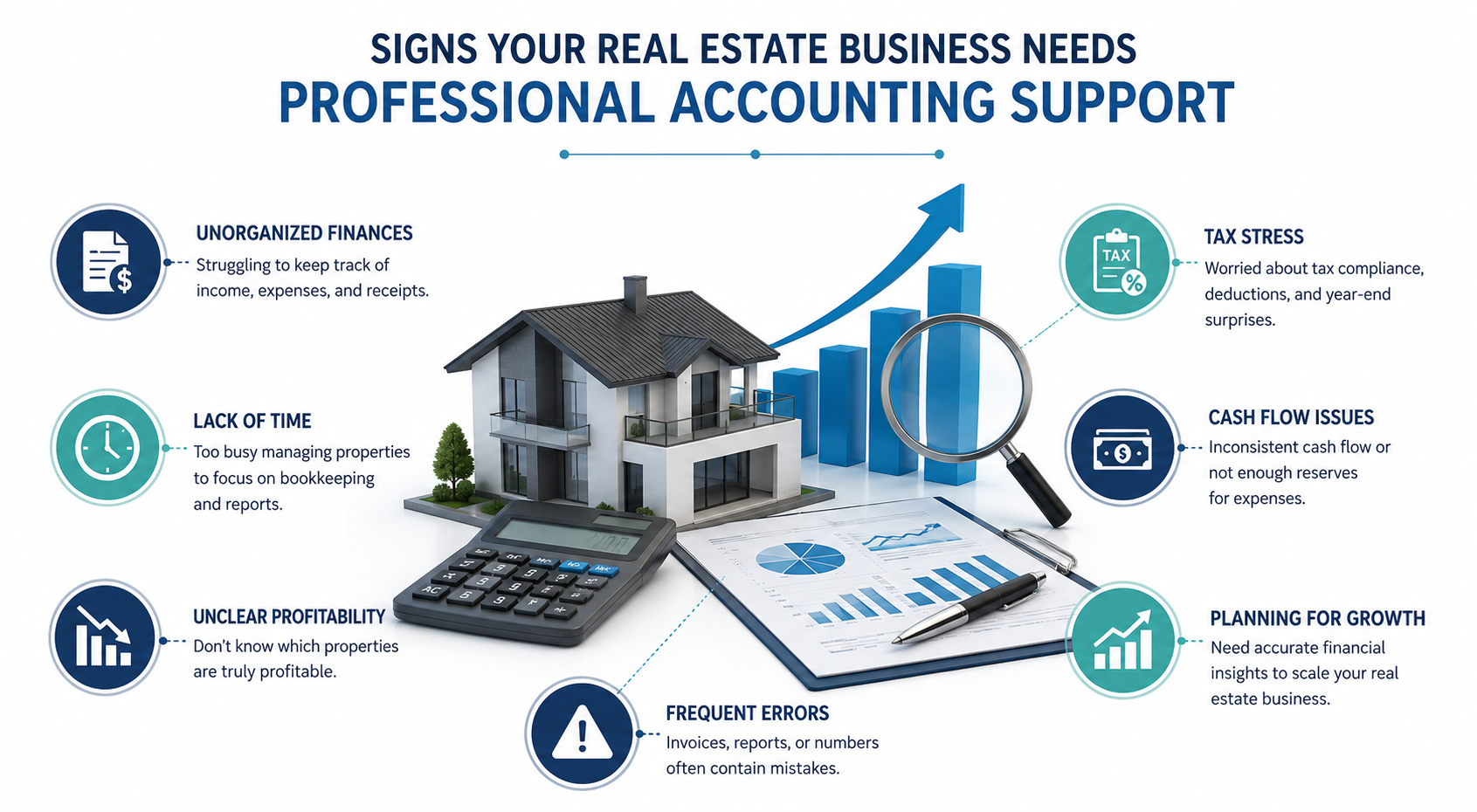
As your real estate business scales, managing end-to-end finances becomes challenging. Although minimal bookkeeping works in the early stages, there will come a time when professional support becomes essential for maintaining accuracy, compliance, and ensuring profitability.
You may need the assistance of real estate accountants if you notice any of the following signs:
If any of these challenges sound familiar, investing in Residential Real Estate Accounting services can help you gain better financial control, reduce compliance risks, improve cash flow management, and make data-driven decisions that support the long-term growth and profitability of your real estate business.
Managing real estate finances in-house can be both time-consuming and costly, especially as property portfolios grow. Outsourcing real estate accounting allows businesses to access specialized expertise without the expense of hiring and maintaining a full-time accounting team.
By partnering with experienced real estate accountants, businesses will get access to a service that is industry-specific. This helps improve accuracy while reducing the risk of costly errors and penalties.
Outsourcing can be beneficial for operational efficiency. Instead of spending valuable time on bookkeeping, reconciliations, and administrative tasks, property owners and investors can focus on tenant management, property improvements, and business expansion.
Some of the primary benefits of outsourcing real estate accounting include:
For businesses seeking growth and profitability, outsourcing offers a cost-effective way to strengthen financial management while maintaining flexibility and control.
OHI provides specialized accounting support that is tailored to the needs of real estate businesses, including property managers, landlords, developers, and investors.
Its experienced professionals help manage day-to-day financial operations such as accounts payable and receivable, bank reconciliations and financial reporting.
By delivering accurate, scalable, and cost-effective accounting solutions, OHI enables real estate companies to improve financial visibility, maintain compliance, reduce administrative workloads, and focus on growing and managing profitable property portfolios.
In the real estate industry, financial management is crucial to maintaining profitability and supporting long-term growth.
Experienced real estate accountants can assist businesses in navigating complex financial processes, improving cash flow, and ensuring compliance. Whether you own rental properties, manage developments, or have a huge real estate investment portfolio, professional accounting support is what you need to create a strong financial foundation.
By leveraging specialized expertise and scalable solutions, businesses can efficiently streamline operations, reduce any possible risks, and focus on maximizing the value of the properties.

Real estate accountants manage all financial activities related to property investments, rental properties, real estate development, and property management. The services of a real estate accountant include bookkeeping, tax planning, financial reporting, budgeting, and compliance management.
A real estate accountant specializes in industry-specific financial practices including depreciation, rental income accounting, property-related tax regulations, as well as real estate investment analysis.
Yes. Real estate accountants help to monitor income and expenses, forecast cash flow needs, and offer helpful financial insights that are important in maintaining healthy cash flow.
Real estate accountants help in managing tenant income, vendor payments, maintenance expenses, financial reporting, budgeting, and compliance requirements for multiple properties.